
「議員削減」という名のリスク――民主主義はこうして静かに削られる
議員削減の議論が、再び動き出した。
そして今回も、それは「良いこと」として語られている。
自民党と維新は、衆議院の定数を45議席削減する法案提出で一致。しかも今回は、比例代表を中心に削る方向だという。
一見すると、無駄削減の話に見える。
だがこれは、単なるコストの問題ではない。
民意の通り道を細くする話だ。
本稿では、この問題を制度論としてではなく、海外で実際に起きた事例も踏まえながら見ていく。
どの国でも、こうした動きは最初、
「正しい改革」の顔をして始まっている。
■ 民主主義の脅威としての議員削減
議員削減は単なる制度改革ではない。
それは、民主主義の回路を細くする行為である。
民主主義とは、選挙の有無ではない。
異なる立場の人間が議会に入り、
議論し、対立し、修正し、
権力を監視し続ける仕組みそのものだ。
その過程は非効率で、時間がかかり、時に混乱する。
しかし、その“面倒さ”こそが民主主義の本質である。
議員削減が削るもの
議員削減は、この面倒な過程を削る。
- 代表の数を減らす
- 異論の入り口を狭める
- 権力を監視する目を減らす
つまりこれは、
制度の合理化ではなく、民主主義の耐久力の低下である。
■ 日本でこの政策が特に危険な理由
日本は、制度としては民主主義の国だ。
しかし、その中身がどこまで機能しているかとなると、慎重に見る必要がある。
民主主義は、制度だけで動くものではない。
それを支える感覚が社会に共有されているかどうかで、大きく変わる。
権力を疑うこと。
異論を受け入れること。
少数の声を残すこと。
こうした前提がどこまで共有されているのか。
楽観視はできない。
むしろ日本では、
対立を避けること。
空気を乱さないこと。
早く結論を出すこと。
こうした価値観の方が、優先されやすい傾向がある。
その結果、
議論が多い=無駄
対立がある=問題
少数意見=邪魔
という認識が生まれやすい。
しかし本来は逆だ。
議論があるのは、多様な社会である証拠であり、
対立があるのは、利害が存在するからであり、
少数意見が残ることこそが、安全装置として機能している。
それを非効率として削っていけば、
摩擦が失われる。
そして摩擦が失われると、
権力を止める力も弱くなる。
議員削減は、その流れの中に位置づけられる。
代表の数を減らす。
異論の入り口を狭める。
監視の目を減らす。
その影響は均等ではない。
削られるのは、
小さな声である。
地方。
無党派層。
少数派。
制度に乗りにくい意見ほど、外へ押し出される。
その結果、
政治の多様性は失われ、
意思決定は単純化されていく。
そして最終的に残るのは、
決める側と従う側が分離した政治である。
問題は、ここにある。
こうした変化が、日本ではしばしば
「改革」
「効率化」
「無駄削減」
として受け入れられやすいことだ。
だからこそ、この問題は見過ごされやすい。
そして気づいたときには、
戻しにくい状態になっている。
■ 海外事例が示していること
この問題は、日本固有のものではない。
議員削減や議会構造の見直しは、これまで複数の国で繰り返し行われてきた。
しかも、それは必ずしも同じ政治体制の国だけではない。
東欧や中東、旧ソ連圏など、
地域も制度も異なる国で共通して見られる動きだ。
制度の違いを超えて共通しているのは、
民主主義の基盤が強固とは言い難い国、
あるいは、すでに揺らぎ始めている国で採用されていることだ。
そして対照的に、
議員数を減らさず、むしろ議論の厚みを維持している国も存在する。
代表的なのが、イギリスだ。
イギリスの議会は、非効率に見えるほど議論が長く、手続きも複雑だ。
しかしそれは削られていない。
なぜか。
民主主義は効率で測るものではない、という前提が共有されているからだ。
つまりここには、明確な分岐がある。
制度を「効率化する対象」として扱うのか、
それとも「支えるべき仕組み」として扱うのか。
この違いが、その後の政治の姿を決める。
そのうえで重要なのは、議員削減はどの国でも最初、
「改革」「効率化」「無駄削減」という、否定しにくい言葉で語られてきたという点だ。
しかし、その先で起きていることは共通している。
代表の縮小。
異論の排除。
権力の集中。
そしてその変化は、ある日突然起きるわけではない。
制度の見直し。
選挙制度の調整。
議会構造の変更。
そうした一つ一つの「小さな変更」として進む。
だからこそ、それは危機として認識されにくい。
むしろ、
「合理的な見直し」
「現実的な対応」
「時代に合わせた改革」
として受け入れられていく。
しかし結果として残るのは、
選挙はある。
議会もある。
制度も残っている。
それでも、
権力を止める力だけが弱くなった政治だ。
以下では、その具体的な例を見ていく。
1.ハンガリー――選挙は残り、競争が変わる
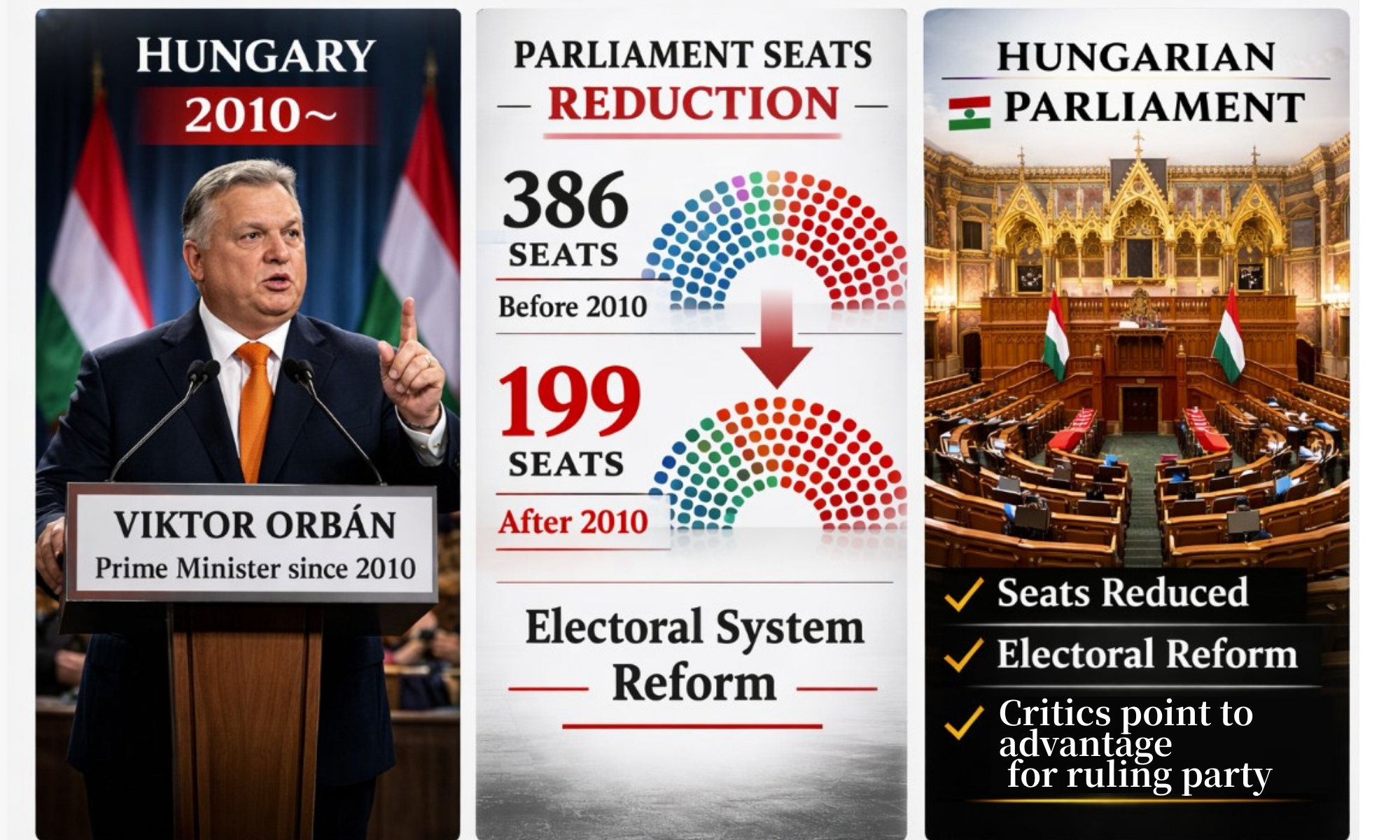
ハンガリーでは、2010年以降、オルバーン・ヴィクトル政権のもとで制度変更が進められた。
議席数は386から199へと削減され、
あわせて選挙制度も再設計された。
名目は「制度改革」だった。
その背景にあったのは、政治の停滞や不安定さへの不満だった。
連立の不安定。
意思決定の遅れ。
経済的な停滞。
こうした状況の中で、「より強い統治」と「安定した政治」が求められるようになる。
そして制度は、安定と効率を優先する方向へと再設計されていく。
だが実際には、与党に有利な形へとルールが調整され、
政権交代が起きにくい構造が作られていく。
こうした変更については、与党に有利な制度設計になっているとの指摘もある。
重要なのは、制度は残っているという点だ。
選挙はある。
野党も存在する。
しかし、
競争の条件そのものが変わっていく。
議席配分や選挙ルールの変更によって、
同じ得票でも結果が異なりうる構造が生まれる。
その結果、
選挙は行われていても、
政権が変わる可能性は低くなっていく。
つまり、
制度が残っていても、競争の前提が変われば、
民主主義の働き方そのものが変質する。
これは、制度の廃止ではない。
制度の「中身」が書き換えられる現象である。
2.トルコ――制度は残り、機能が変わる
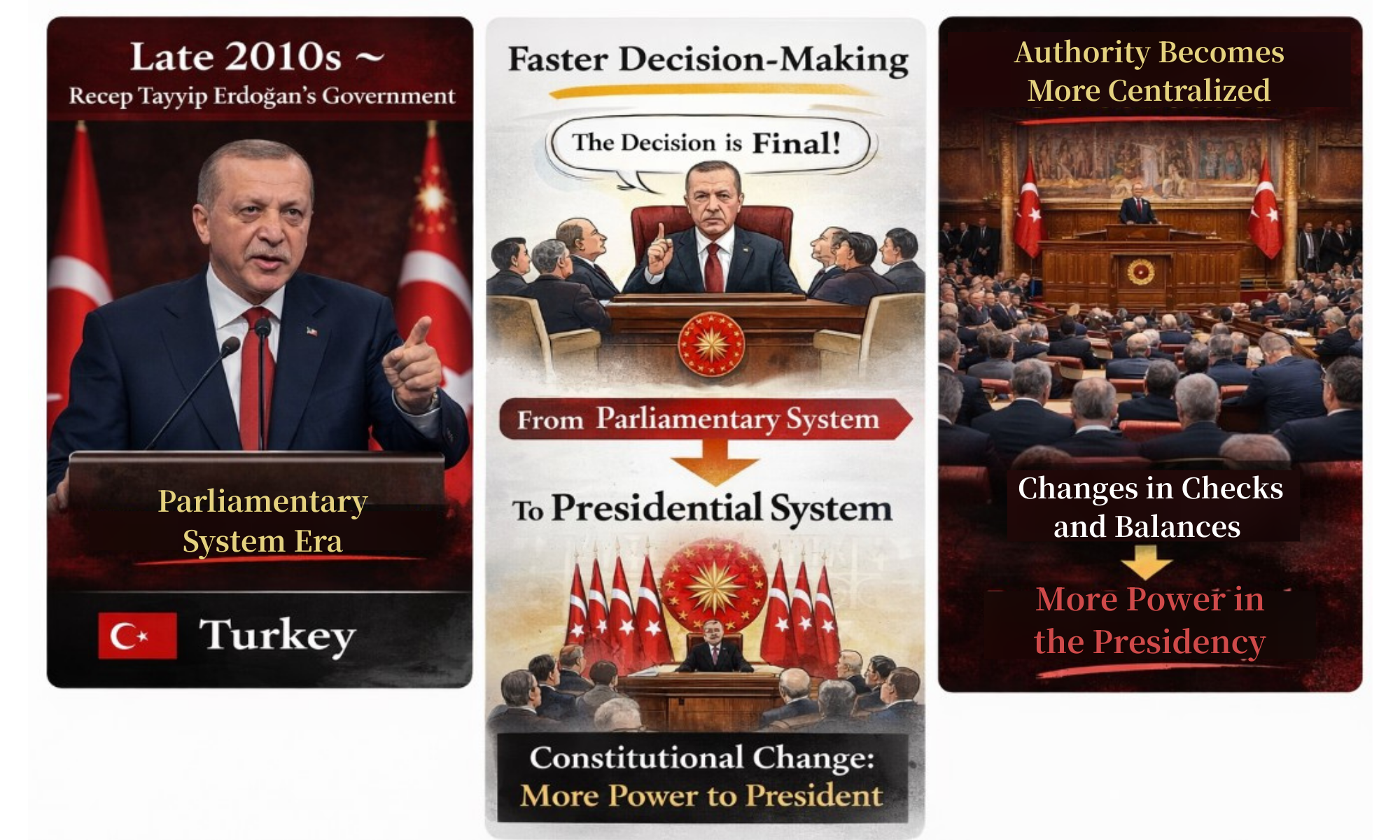
トルコでは、2010年代後半、政治の意思決定を迅速化するための制度変更が進められた。
背景にあったのは、「政治が遅い」という不満だった。
議論が長い。
調整に時間がかかる。
そうした不満を受けて、「強いリーダーシップ」と「迅速な決定」が求められるようになる。
そして2017年、当時の大統領レジェップ・タイイップ・エルドアンのもとで行われた憲法改正により、
議院内閣制から大統領制へと移行した。
この変更によって、大統領の権限は大きく強化された。
結果として、制度はスピードを優先する形へと変わった。
確かに、決定は速くなった。
しかし同時に、
止める仕組みが弱くなった。
議会の影響力は相対的に低下し、
権力を分散させる構造は変化していく。
速く決まるが、修正しにくい政治が残る。
ここで重要なのは、制度そのものは消えていないという点だ。
議会は存在し、選挙も行われている。
だが、
議会の力が弱まることで、
選挙によるチェック機能は限定的になっていく。
つまり、
選挙があっても、権力を抑える仕組みが機能しなければ、
実質的には権力が集中する構造が生まれる。
これは、制度の廃止ではない。
制度の意味そのものが変わる現象である。
3.ロシア――制度が残り、機能が消える政治
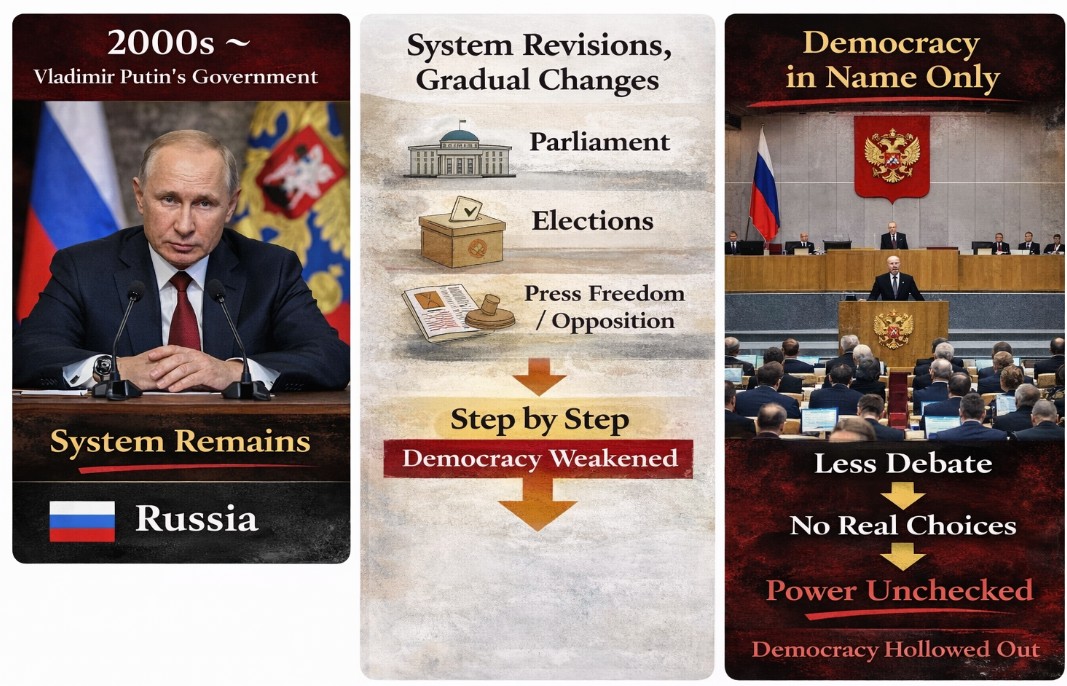
ロシアでは、2000年代以降、ウラジーミル・プーチン政権のもとで、議会や選挙制度が段階的に再編されてきた。
その背景にあったのは、1990年代の政治的混乱と不安定さへの反動だった。
経済の混乱。
権力の分散。
統治の不安定さ。
こうした状況の中で、「強い国家」と「安定した統治」が求められるようになる。
そして制度は、秩序と統制を優先する方向へと調整されていく。
制度は維持されている。
議会も存在する。
選挙も行われている。
しかし、
それらは、権力を制限する仕組みとしては機能しにくくなっていく。
議会は議論の場というよりも、
決定を承認する場へと役割が変化していく。
この変化は、一度に起きたものではない。
選挙制度の調整。
政党システムの再編。
メディアや野党への制約。
そうした一つ一つの変更が積み重なり、
制度の機能が徐々に置き換えられていく。
その結果、
制度の外形は維持されたまま、
権力のバランスは変化していく。
つまり、
制度が残っていても、それが権力を制限しなくなれば、
民主主義の働き方そのものは大きく変わる。
これは、制度の消滅ではない。
制度の「機能」が置き換えられる現象である。
4.イギリス――非効率を維持する民主主義
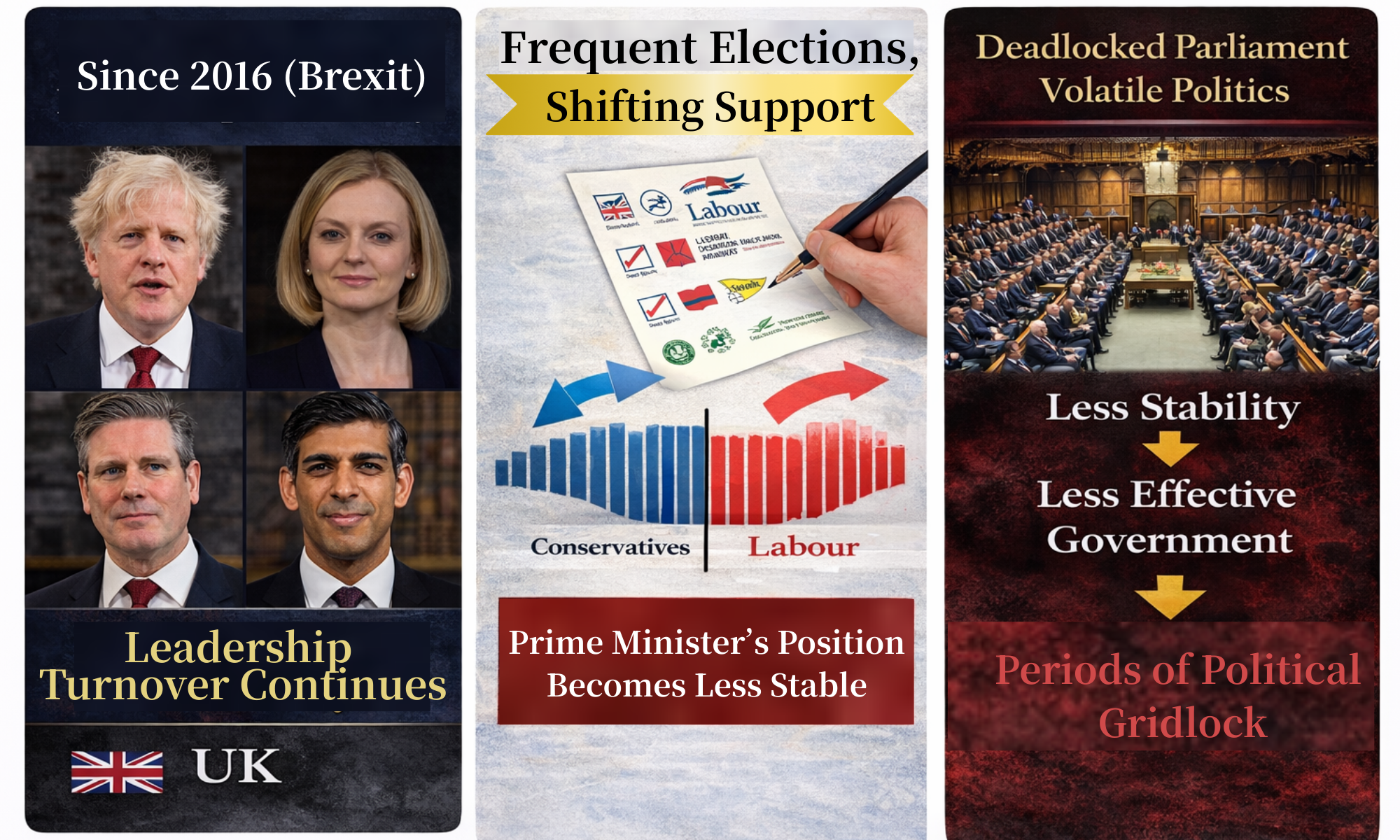
イギリスでは、長い時間をかけて議会制度が維持されてきた。
議論は長く、手続きも複雑だ。
現代においても、その構造は大きく変えられていない。
その背景にあるのは、民主主義に対する考え方の違いである。
イギリスでは、議会の「非効率」は問題ではない。
むしろ、
その非効率こそが、権力を止める仕組みだと考えられている。
決定を遅らせ、異論を残し、修正の余地を確保する。
そうした過程そのものが、民主主義の中核とされている。
2016年のブレグジット以降、イギリス政治は大きく揺れた。
国民投票を契機に、議会は長期間にわたって対立し、
政治は混乱の中に置かれることになる。
その過程で、首相は短期間で交代していく。
テリーザ・メイ。
ボリス・ジョンソン。
リズ・トラス。
リシ・スナク。
そして現在のキア・スターマーへ。
政治は明らかに不安定になった。
意思決定は遅れ、対立は可視化された。
しかし、
それでも議会の構造そのものは維持されている。
議論の場は残り、異論が排除されることもない。
つまり、
不安定さを受け入れてでも、
権力を分散させる仕組みを維持するという選択がなされている。
ここに、重要な分岐がある。
制度を「効率化する対象」として削るのか。
それとも、
「支えるべき仕組み」として維持するのか。
イギリスは後者を選んでいる。
だからこそ、議員数を減らし、議会の厚みを削るという発想は、
基本的に採られていない。
民主主義とは、効率ではなく、
権力をどう制御するかの問題だからである。
だからこそ、議員削減という発想そのものが、
民主主義の前提として共有されていない。
各国の例が示しているのは、この構造が日本でも起きないとは限らないという点にある。
議員削減を選ぶ国に共通する構造
これらの事例に共通しているのは、
すべてが「正しい改革」として始まっていることだ。
効率化。
無駄の削減。
迅速な意思決定。
どれも否定しにくい。
だからこそ、進む。
そしてもう一つ、
変化は常に、段階的に進む。
一度に壊れるわけではない。
制度は少しずつ調整され、一つ一つは小さな変更として進む。
その結果、気づいたときには、別のものになっている。
ここで重要なのは、
議員削減は、どの国でも「ある段階」で現れているという点だ。
それは、
政治への不満が高まっている時期。
意思決定の遅さに苛立ちが広がっている時期。
社会が不安定になり、「強い決定」が求められる時期である。
議論が長い。
決まらない。
対立ばかりだ。
そうした空気の中で、
「議会は多すぎる」
「もっと減らすべきだ」
という声が正当化されていく。
そしてもう一つの共通点は、
民主主義の基盤が十分に強固とは言えない国、
あるいは、その基盤が揺らぎ始めている国で採用されやすいという点だ。
議会が信頼されていない。
制度よりも結果が優先される。
手続きよりもスピードが評価される。
その状態で議員削減が行われると、
議会の多様性と規模が削られ、
権力が集中しやすい構造が一気に進む。
議員が減る。
異論が減る。
調整が減る。
その結果、意思決定は速くなる。
だが同時に、権力を止める仕組みも弱くなる。
さらに、この変化は政治の方向性にも影響を与える。
議会の多様性が失われるほど、異なる価値観や少数意見が入り込む余地は狭くなる。
その結果、
国家の統一。
秩序の維持。
内部の結束。
といった、一つの方向にまとめる政治が強まりやすくなる。
それ自体は否定されるものではない。
しかし問題は、それが異論の排除と結びついたときである。
異なる立場。
少数意見。
批判的な視点。
それらが「分断」や「非効率」として扱われ、徐々に排除されていく。
そして政治は、多様な意見を調整する場から、
同じ方向へと統合する場へと変化していく。
その延長線上には、制度は維持されていても、
権力の集中が進み、民主主義の実質が変質していく状態がある。
それは、外形としては民主主義を保ちながら、
統治のあり方が一方向に傾いていく構造である。
ここで使われる言葉は、常に同じだ。
- 効率化
- スピード
- 無駄削減
- 国民のため
一見すると、すべて正しい。
しかし問題は、
それが議論を削るために使われているのか、
権力を集中させるために使われているのかという点にある。
だからこそ問題は、結果ではない。
その変化が始まった段階で見抜けるかどうかにある。
なぜ「スピード感」をもって進められるのか
なぜ、民主主義を弱くしかねない政策ほど、「スピード感」をもって進められるのか。理由は単純だ。時間をかけると、人々が問題に気づいてしまうからである。
- 誰が得をするのか
- 誰が排除されるのか
- 監視機能がどこまで落ちるのか
- 既得権益がどう温存されるのか
これらは、丁寧に議論すればするほど見えてくる。だから急ぐ。単純化する。異論を「抵抗勢力」「改革反対」として処理する。
スピード感は、美徳に見える。
だが時にそれは、熟議を飛ばし、危険を見えなくし、民主主義の摩擦を「無駄」として処理するための装置になる。
日本で起きうる最悪の流れ
日本のように、民主主義の感覚が十分に成熟していない社会では、
この流れが特に起きやすい。
なぜなら、制度の意味そのものよりも、
結果の速さや分かりやすさの方が評価されやすいからだ。
議論が長い。
決まらない。
対立ばかりが見える。
そうした状態が続くと、議会は「必要な摩擦の場」ではなく、
「面倒で非効率な場所」として受け取られやすくなる。
そこでまず流されるのが、
「議員削減=良いこと」という単純な物語である。
税金の節約。
無駄の削減。
政治の効率化。
どれも分かりやすい。
そして分かりやすいからこそ、疑われにくい。
次に起きるのは、慎重論の処理である。
制度の歪みを懸念する声。
少数意見の排除を危惧する声。
権力集中の危険を指摘する声。
そうしたものは、
「古い政治」
「抵抗勢力」
「改革に反対する側」
として片づけられやすい。
すると議論そのものが、
中身ではなくイメージで処理されるようになる。
そして制度変更が実行される。
だが、そこで削られるのは、単に議席の数ではない。
削られるのは、
少数派の入口。
無党派層の反映。
地方の声。
異論が制度の中に残る余地である。
その結果、政治は「すっきり」する。
だがそのすっきりとは、
多様な声が見えなくなっただけかもしれない。
大政党はさらに強くなる。
組織票を持つ側はさらに有利になる。
行政を監視する力は薄くなる。
そして国民の側には、別の変化が起きる。
どうせ変わらない。
誰がやっても同じだ。
自分の声は届かない。
そうした政治的無力感が広がっていく。
投票率はさらに下がる。
政治参加はさらに減る。
その分だけ、組織と既得権益の力は相対的に強くなる。
ここで起きているのは、単なる制度変更ではない。
民主主義そのものの循環が、逆回転し始めるのである。
民意を反映する仕組みが弱くなる。
その結果、人々は政治から離れる。
人々が離れるほど、制度はさらに一部のためのものになる。
この循環が定着すると、
選挙はある。
議会もある。
だが、社会の多様性を引き受ける力だけが失われていく。
それは、独裁の宣言ではない。
むしろ、民主主義の外形を残したまま、
中身だけが少しずつ痩せていく過程である。
だからこそ危険なのは、壊れた後ではなく、
壊れ始めた段階でそれが「改革」に見えてしまうことだ。
結論
議員削減は、改革ではない。効率化でもない。
それは、民主主義を静かに削る政策である。
そして最も危険なのは、それが「良いこと」として進められることだ。
税金の節約。
無駄の削減。
分かりやすい政治。
どれも正しく見える。
だが、その裏で何が失われるのかは、ほとんど語られない。
私は、この点に強い違和感を覚える。
議会の非効率さや、時間のかかる議論は、
本来は削るべきものではなく、
権力を止めるために意図的に残されている仕組みではないのか。
日本は制度としては民主主義国家である。
しかし、その前提を支える感覚が十分に共有されているとは限らない。
だからこそ、こうした「効率化」は疑われないまま進みやすい。
そして気づかないうちに、
制度の意味そのものが変わっていく。
民主主義の形を保ったまま、
中身だけが変質していく。
本当に問うべきなのは、議員が多いか少ないかではない。
この政策が、民主主義を強くするのか、弱くするのか。
問うべきなのは、その一点である。
“Cutting Lawmakers” and the Risk Behind It — How Democracy Is Quietly Eroded
The debate over cutting lawmakers has started moving again.
And once again, it is being presented as something positive.
The Liberal Democratic Party and Nippon Ishin have agreed to submit a bill to cut 45 seats from the House of Representatives. This time, the proposal is said to focus mainly on proportional representation seats.
At first glance, it looks like a story about cutting waste.
But this is not simply about cost.
It is about narrowing the pathways through which public opinion reaches politics.
This article looks at the issue not merely as an institutional reform debate, but in light of cases that have already unfolded abroad.
In every country, moves like this begin the same way.
They begin under the guise of “good reform.”
■ Why Cutting Lawmakers Threatens Democracy
Cutting lawmakers is not simply a matter of institutional reform.
It is an act of narrowing the channels of democracy itself.
Democracy is not defined by the mere existence of elections.
It is the system through which people with different positions enter parliament,
debate, confront one another, revise proposals,
and continue to monitor power.
That process is inefficient, time-consuming, and at times disorderly.
But that very “inconvenience” is the essence of democracy.
What Cutting Lawmakers Removes
Cutting lawmakers strips away that very process.
- It reduces the number of representatives
- It narrows the entry points for dissenting views
- It reduces the number of eyes watching power
In other words, this is not the rationalization of institutions.
It is a weakening of democracy’s resilience.
■ Why This Policy Is Especially Dangerous in Japan
Japan is, institutionally, a democracy.
But whether its substance is functioning to the same extent is another matter, and one that requires caution.
Democracy does not run on institutions alone.
Its strength depends greatly on whether the sensibilities that sustain it are widely shared in society.
To question power.
To accept dissent.
To preserve minority voices.
How deeply are these assumptions actually shared?
There is little reason for optimism.
In Japan, by contrast, there is a stronger tendency to value:
Avoiding confrontation.
Not disturbing the social atmosphere.
Reaching conclusions quickly.
As a result, people are more likely to see things this way:
Too much debate = waste
Conflict = a problem
Minority views = a nuisance
But in reality, the opposite is true.
Debate exists because society is diverse.
Conflict exists because interests differ.
Minority opinions remain because they function as a safeguard.
If all of that is cut away in the name of inefficiency,
friction disappears.
And once that friction disappears,
the power to restrain authority also weakens.
Cutting lawmakers belongs squarely within that process.
It reduces the number of representatives.
It narrows the entry points for dissent.
It reduces the number of eyes watching power.
Its effects do not fall evenly.
What gets cut away first is not the strongest side.
It is the smaller voices.
Local constituencies.
Independent voters.
Minority groups.
Views that are less easily absorbed into the existing system are pushed outward.
As a result,
political diversity is diminished,
and decision-making becomes increasingly simplified.
And what remains in the end is
a politics in which those who decide are separated from those who are governed.
That is where the problem lies.
In Japan, changes like this are often accepted as
“reform”
“efficiency”
“cutting waste”
That is exactly why the problem is so easily overlooked.
And by the time people notice,
it has already become difficult to reverse.
■ What Overseas Cases Show
This issue is not unique to Japan.
Cuts to lawmakers and revisions to parliamentary structures have been repeated in multiple countries.
And not only in countries with the same political system.
Across Eastern Europe, the Middle East, and parts of the former Soviet sphere,
similar patterns can be seen despite very different institutions and histories.
What these countries have in common is this:
such measures tend to be adopted in countries where the foundations of democracy are not especially strong,
or where those foundations have already begun to weaken.
By contrast, there are also countries that have not reduced the number of lawmakers,
and have instead maintained the thickness of parliamentary debate.
The most representative case is the United Kingdom.
The British Parliament is often slow, argumentative, and procedurally cumbersome.
But it has not been cut back.
Why?
Because there is a shared assumption that democracy is not something to be measured by efficiency alone.
In other words, there is a clear divergence here.
Does a country treat its institutions as something to be streamlined?
Or does it treat them as something that must be preserved and sustained?
That difference shapes the political system that follows.
What matters is that in every country, proposals to cut lawmakers are first presented in difficult-to-oppose language:
“reform”
“efficiency”
“cutting waste”
And yet what follows is strikingly similar.
Reduction of representation.
Exclusion of dissent.
Concentration of power.
And these changes do not arrive all at once.
Institutional revisions.
Electoral adjustments.
Changes to parliamentary structure.
They advance through a series of seemingly small changes.
That is precisely why they are hard to recognize as a danger.
Instead, they are often accepted as
“a rational review”
“a realistic response”
“reform suited to the times”
And what remains in the end is this:
Elections still exist.
Parliament still exists.
The institutions are still there.
And yet,
what weakens is the very capacity to restrain power.
Below, we turn to the specific cases.
1. Hungary — Elections Remain, but Competition Changes
In Hungary, institutional changes moved forward after 2010 under the government of Viktor Orbán.
The number of parliamentary seats was reduced from 386 to 199,
and the electoral system was redesigned as well.
The official name for it was “institutional reform.”
Behind it, however, lay public frustration with political stagnation and instability.
Fragile coalitions.
Slow decision-making.
Economic stagnation.
In that context, calls for “stronger governance” and “stable politics” began to grow.
And institutions were redesigned in a direction that prioritized stability and efficiency.
In practice, however, the rules were adjusted in ways favorable to the ruling party,
creating a structure in which regime change became harder.
There have also been criticisms that these institutional changes gave the ruling side a structural advantage.
What matters is that the system itself remained in place.
Elections still exist.
Opposition parties still exist.
And yet,
the conditions of competition themselves begin to change.
Through changes in seat allocation and electoral rules,
a structure emerges in which the same level of votes can produce different outcomes.
As a result,
even though elections continue to be held,
the possibility of changing the government becomes increasingly limited.
In other words,
even if institutions remain, once the premises of competition are altered,
the way democracy functions also changes.
This is not the abolition of institutions.
It is a phenomenon in which the very substance of the institution is rewritten.
2. Turkey — Institutions Remain, but Their Function Changes
In Turkey, institutional changes moved forward in the late 2010s in the name of speeding up political decision-making.
Behind them lay frustration with what was seen as “slow politics.”
Debate takes too long.
Coordination takes too much time.
Against that backdrop, calls for “strong leadership” and “rapid decisions” grew stronger.
Then, in 2017, under President Recep Tayyip Erdoğan, a constitutional revision shifted the country from a parliamentary system to a presidential one.
This change significantly expanded presidential power.
As a result, the system was reshaped in a way that prioritized speed.
Decisions did, in fact, become faster.
But at the same time,
the mechanisms that restrain power became weaker.
The influence of parliament declined relative to the presidency,
and the structure that had dispersed power began to change.
What remained was a politics in which decisions could be made quickly, but were harder to revise.
The crucial point is that the institutions themselves did not disappear.
Parliament still exists.
Elections are still held.
And yet,
once parliament’s power weakens,
the checking function of elections becomes more limited.
In other words,
even when elections remain, if the institutions that restrain power no longer function,
a structure of de facto power concentration emerges.
This is not the abolition of institutions.
It is a phenomenon in which the meaning of those institutions changes.
3. Russia — Institutions Remain, but Politics Loses Its Function
In Russia, since the 2000s, parliamentary and electoral institutions have been gradually restructured under the government of Vladimir Putin.
Behind this lay a reaction against the political turmoil and instability of the 1990s.
Economic disorder.
Fragmented power.
Unstable governance.
In that context, calls for a “strong state” and “stable rule” grew more persuasive.
Institutions were then adjusted in a direction that prioritized order and control.
The institutions themselves remained in place.
Parliament still exists.
Elections are still held.
And yet,
they became less able to function as mechanisms for restraining power.
Parliament increasingly shifted from a place of debate
to a place where decisions are ratified.
This change did not happen all at once.
Adjustments to the electoral system.
Reorganization of the party system.
Restrictions on media and opposition forces.
Those changes accumulated step by step,
and the function of the institutions was gradually replaced.
As a result,
the outward form of the system remained,
while the balance of power changed.
In other words,
even when institutions remain, if they no longer restrain power,
the way democracy functions changes fundamentally.
This is not the disappearance of institutions.
It is a phenomenon in which the “function” of institutions is replaced.
4. The United Kingdom — A Democracy That Preserves Inefficiency
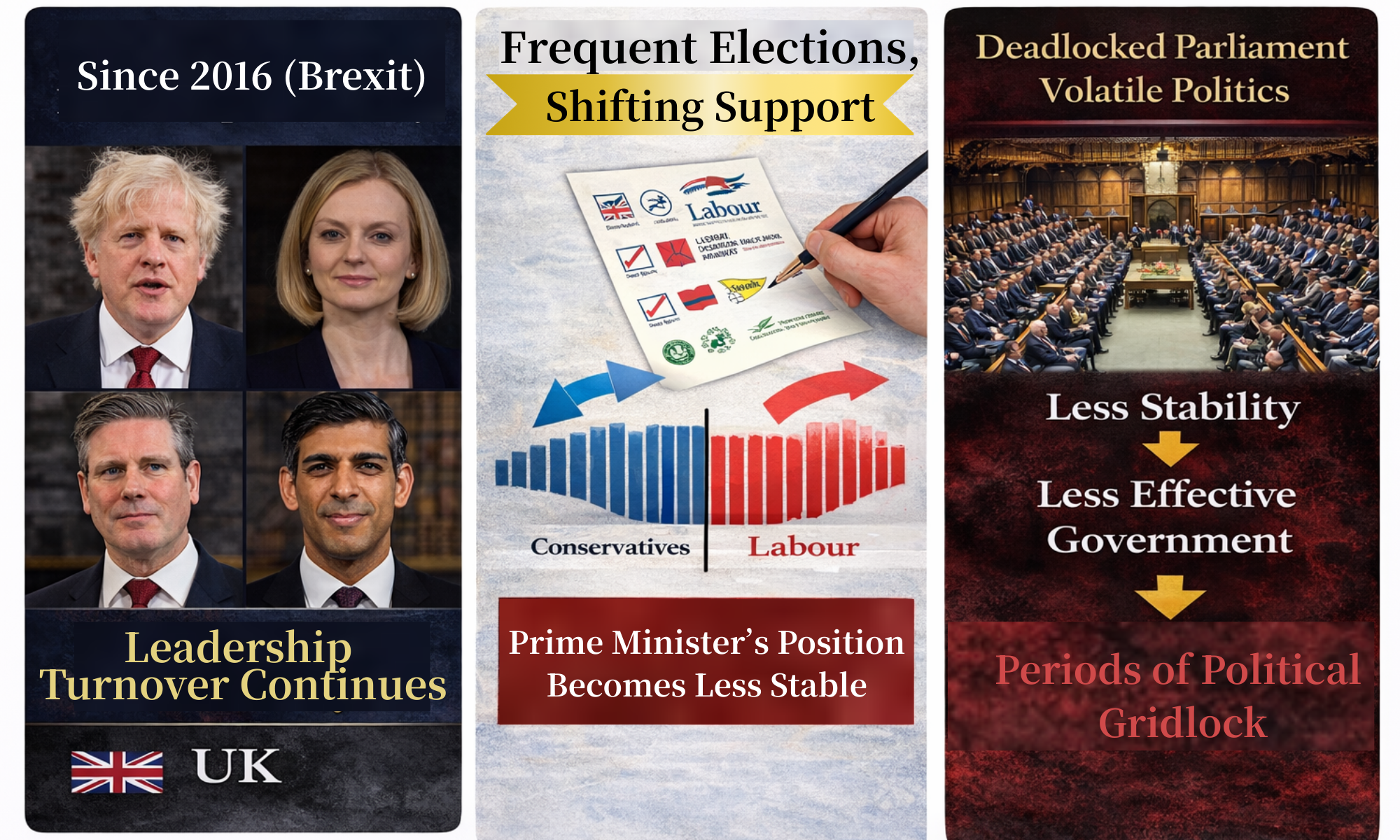
In the United Kingdom, parliamentary institutions have been maintained over a long period of time.
Debate is lengthy, and procedures are complex.
Even today, that structure has not been fundamentally altered.
The reason lies in a different way of thinking about democracy.
In Britain, the “inefficiency” of parliament is not seen as a flaw.
Rather,
that very inefficiency is understood as part of the mechanism that restrains power.
It slows decisions down, preserves dissent, and leaves room for revision.
That process itself is treated as part of the core of democracy.
After Brexit in 2016, British politics entered a period of profound instability.
Triggered by the referendum, parliament remained divided for a long time,
and politics was thrown into confusion.
During that period, prime ministers changed in rapid succession:
Theresa May.
Boris Johnson.
Liz Truss.
Rishi Sunak.
And now Keir Starmer.
Politics clearly became less stable.
Decision-making slowed, and conflict became visible.
And yet,
the structure of parliament itself was preserved.
The arena of debate remained,
and dissent was not excluded.
In other words,
even while accepting instability, Britain chose to preserve a system that disperses power.
That is the key dividing line.
Should institutions be cut back as targets of “efficiency”?
Or should they be maintained as mechanisms that must be sustained?
Britain has chosen the latter.
That is why the idea of reducing the number of lawmakers and thinning out parliamentary debate
has not become a basic political assumption there.
Because democracy is not, in the end, a question of efficiency.
It is a question of how power is to be restrained.
That is exactly why the idea of cutting lawmakers itself
is not widely shared there as a democratic premise.
What these cases show is that there is no guarantee that the same structure could not emerge in Japan as well.
■ Common Structural Patterns in Countries That Reduce Lawmakers
What these cases have in common is this:
they all begin under the banner of “correct reform.”
Efficiency.
Cutting waste.
Faster decision-making.
All of these are difficult to oppose.
That is precisely why they move forward.
And there is another shared pattern.
Change always proceeds gradually, in stages.
It does not collapse all at once.
Institutions are adjusted little by little,
each step presented as a small reform.
And by the time people realize it,
the system has become something else.
The key point is this:
in every country, the reduction of lawmakers appears at a certain stage.
That stage typically includes:
Growing dissatisfaction with politics.
Frustration with slow decision-making.
A social atmosphere demanding “strong” and decisive leadership.
Debate feels too long.
Nothing seems to get decided.
Politics appears stuck in conflict.
In that environment,
voices emerge saying:
“There are too many lawmakers.”
“We should reduce them.”
And those views begin to be normalized.
Another shared condition is this:
these policies tend to be adopted in countries where democratic foundations are not especially strong,
or where those foundations have begun to weaken.
Parliament loses trust.
Outcomes are valued more than process.
Speed is valued more than procedure.
When lawmakers are reduced under those conditions,
the diversity and scale of parliament shrink,
and structures that concentrate power advance rapidly.
Fewer lawmakers.
Less dissent.
Less adjustment.
As a result, decision-making becomes faster.
But at the same time,
the mechanisms that restrain power weaken.
This also affects the direction of politics.
As parliamentary diversity declines,
the space for different values and minority views narrows.
And the result is:
National unity.
Maintenance of order.
Internal cohesion.
Politics becomes more easily concentrated in a single direction.
This, in itself, is not necessarily negative.
But the problem arises when it leads to the exclusion of dissent.
Different positions.
Minority views.
Critical perspectives.
These are gradually labeled as “division” or “inefficiency,”
and begin to be pushed out.
Politics then shifts from a space of balancing diverse interests
to a space of alignment in a single direction.
At the end of that process, even if institutions remain,
power becomes concentrated, and the substance of democracy changes.
Outwardly, democracy appears intact.
But internally, the structure of governance begins to tilt toward centralized control.
The language used to justify this is always the same:
- Efficiency
- Speed
- Cutting waste
- For the people
At first glance, all of these sound correct.
But the real question is this:
Are these measures being used to reduce the space of representation?
Or are they being used to concentrate power?
That is why the issue is not the final outcome.
The real question is whether the shift is recognized at the moment it begins.
■ Why It Is Pushed Forward with a Sense of “Speed”
Why are policies that can only weaken democracy so often pushed forward with a sense of speed?
The reason is simple.
If time is taken, people may begin to notice what is actually at stake.
- Who stands to benefit
- Who is being pushed out
- How far oversight functions will decline
- How existing power structures will be preserved
The more carefully these questions are debated, the more visible the underlying problem becomes.
That is why things are rushed.
They are simplified.
Dissent is treated as “resistance” or “opposition to reform.”
Speed often looks virtuous.
But at times, it functions as a device that disperses familiarity, obscures danger, and treats the frictions of democracy as mere “waste.”
■ The Worst-Case Trajectory in Japan
In a society like Japan, where the sensibility needed to sustain democracy has not fully matured, this trajectory is especially likely to emerge.
That is because, more than the meaning of institutions themselves, people tend to value the speed of outcomes and the simplicity of appearances.
Debate takes too long.
Nothing gets decided.
Conflict is too visible.
When that perception takes hold, parliament is no longer seen as a place of necessary democratic friction, but as an inconvenient and inefficient arena.
And that is where the first narrative begins to spread:
“Cutting lawmakers is a good thing.”
Saving tax money.
Reducing waste.
Making politics more efficient.
All of it is easy to understand.
And precisely because it is easy to understand, it is less likely to be questioned.
What comes next is the handling of caution itself.
Voices warning about distortions in the system.
Voices alarmed by the exclusion of minority opinions.
Voices pointing to the risks of concentrated power.
Such voices are easily framed as
“old politics”
“resistance forces”
“those opposed to reform”
And once that happens, the substance of the debate is replaced by image.
Then the institutional change is carried out.
But what is cut away there is not simply the number of seats.
What gets cut away is:
Entry points for minority voices.
Independent and unaffiliated representation.
Local voices.
The space where dissent can remain within the system.
As a result, politics begins to look “cleaner.”
But that very cleanliness may mean only one thing:
that diverse voices have become less visible.
Large parties grow even stronger.
Those with organized voting blocs become even more advantaged.
The capacity to monitor administrative power grows thinner.
And on the side of the public, another change begins.
Nothing will change anyway.
Whoever is in charge, it is all the same.
My voice does not matter.
That kind of political helplessness spreads.
Turnout falls further.
Political participation declines.
And to that extent, organized interests and entrenched power grow relatively stronger.
What is happening here is not merely an institutional change.
The erosion of democracy itself begins to move in reverse.
The mechanisms that reflect public will become weaker.
As a result, people withdraw from politics.
And the more people withdraw, the more the system becomes something that serves only a part of society.
Once that cycle becomes entrenched,
Elections still exist.
Parliament still exists.
But the capacity to absorb the diversity of society gradually disappears.
This is not a declaration of dictatorship.
Rather, it is a process in which the outward form of democracy remains,
while its substance slowly wastes away from within.
That is why the danger lies not after the collapse, but in the moment when collapse has just begun and is still made to look like “reform.”
■ Conclusion
Cutting lawmakers is not reform. Nor is it efficiency.
It is a policy that quietly carves away at democracy.
And the greatest danger is that it proceeds under the banner of something “good.”
Saving tax money.
Reducing waste.
Simple, easy-to-understand politics.
All of it appears correct.
And yet, what is being lost beneath the surface is rarely discussed.
I feel a strong sense of unease at this point.
The inefficiency of parliament, and the time that democratic debate takes,
may not be things that should be cut away at all.
They may instead be mechanisms intentionally left in place to restrain power.
Japan is, institutionally, a democratic country.
But that does not mean the sensibility needed to sustain that premise is fully shared.
That is exactly why this kind of “efficiency” can advance without being seriously questioned.
And before people notice,
the meaning of the institutions themselves begins to change.
The outward form of democracy remains,
while only its substance is transformed.
The real question is not whether there are too many lawmakers or too few.
The real question is whether this policy strengthens democracy, or weakens it.
That is the one question that must be asked.


コメント