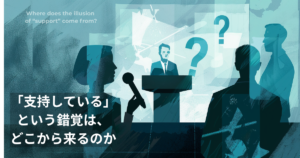
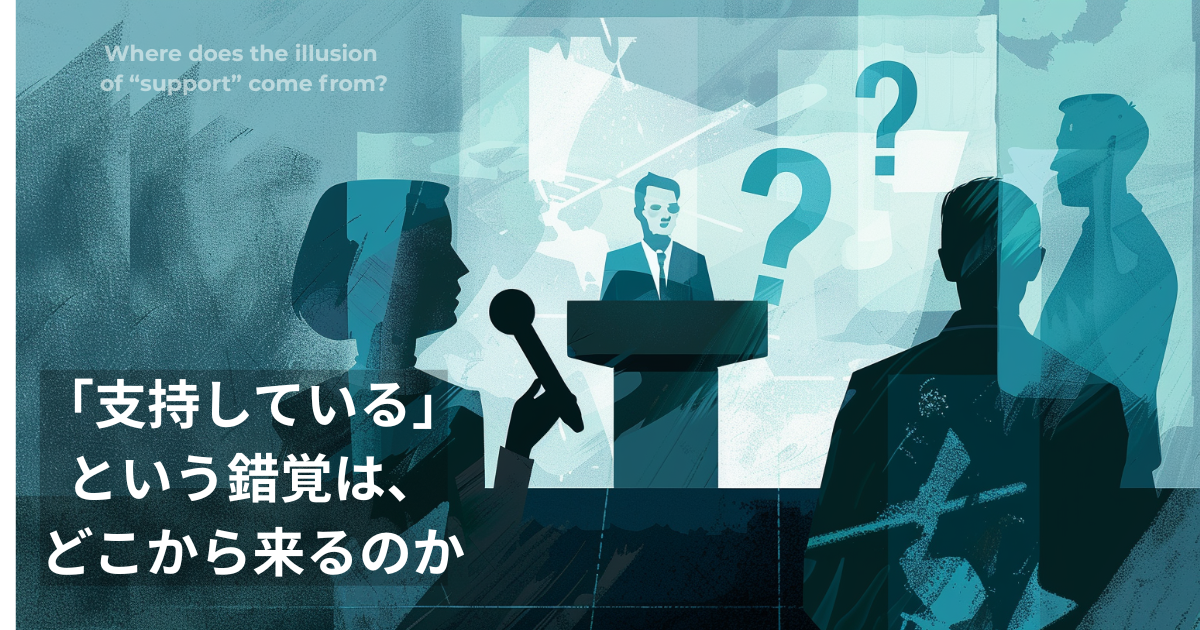
「米国が高市早苗氏を支持している」という錯覚は、どこから来るのか
―日本メディアに登場する「海外筋」の正体と、台湾有事肯定論が「正しさ」に変わる瞬間
はじめに――なぜこの錯覚は繰り返されるのか
日本の安全保障報道、とりわけ台湾有事をめぐる文脈では、しばしば次のような空気が作られる。
米国は、日本により強硬なリーダーを求めている。
その路線を体現するのが高市早苗氏だ。
だが結論から言えば、米国が高市早苗氏を名指しで支持している事実は存在しない。
それにもかかわらず、「米国が高市氏を支持しているように見える」言説は繰り返し生産される。 本稿では、その錯覚がどこから生まれるのかを構造的に整理する。
1. 米国が支持しているのは「人物」ではなく「路線」である
まず大前提として確認すべき点がある。 米国の対日姿勢は、人物評価よりも一貫して制度と路線を重視している。
重視されるのは、「誰が首相か」ではない。 問われるのは、同盟を安定的に運用できるか、政策の継続性が保たれるか、 危機管理が機能し、エスカレーションを回避できるか、という点である。
これは、米国の対外政策が個々の政治家の思想やキャラクターではなく、 国家としての意思決定プロセスと制度運用を軸に設計されているからだ。
日本の国内政治で語られがちな「強硬さ」や「保守色」そのものは、 米国にとって評価の中心ではない。 むしろ、言葉の強さが外交の柔軟性を奪わないか、 同盟管理を不安定にしないか、という点のほうが慎重に見られている。
その意味で、米国が日本に求めているのは、 特定の思想を持つ指導者ではなく、 同盟を事故なく運用できる政治体制そのものである。
つまり、米国が支持しているのは特定の政治家ではなく、 同盟を安定的に維持できる政策路線と制度運用である。
2. 「高市支持」に見える発言は、誰が発しているのか
日本メディアで「米国の声」として紹介される発言には、 はっきりとした偏りがある。
実際に頻繁に引用されているのは、次のような層だ。
- 米国保守系シンクタンクの研究者
- 対中強硬派の元政府関係者
- 共和党右派メディアの論説
彼らが語るのは、あくまで一般論である。
日本はもっと防衛費を増やすべきだ。
同盟国は覚悟を示すべきだ。
抑止力を高めよ。
これらの主張は、高市氏の言説と結果的に重なる部分が多い。 そのため、「米国が高市氏を評価している」という印象が生まれやすくなる。
だが重要なのは、 それらの発言が個々の論者の立場や思想に基づく主張であって、 米国政府の公式な意思表示ではない、という点だ。
日本側で起きているのは、 「米国内の特定の意見」が 「米国全体の評価」であるかのように読み替えられる現象である。
この読み替えが繰り返されることで、 「米国が高市氏を支持している」という印象が補強されていく。
つまり、日本メディアで語られる「米国の声」は、 米国内の一部の主張が拡大解釈されたものであり、 制度的な支持を意味するものではない。
3. 決定的に書かれていない「制度の沈黙」
日本メディアがほとんど触れないが、最も重い事実がある。
それは、米国の「制度」が高市氏について語っていない、という点だ。
米国務省、国家安全保障会議(NSC)、在日米国大使館。
この三つは、米国の対外政策が公式な責任を伴う形で出てくる場所である。
そこから、高市氏を評価する発言、支持を匂わせるコメント、将来の指導者として期待するような言及は出ていない。
ここが重要なのは、沈黙が「無関心」ではなく、同盟運用のルールに直結しているからだ。
同盟国の内政に介入しているように見える行為は、それ自体が同盟を傷つける。
だから米国の制度は、たとえ個々の人物に好悪があっても、簡単に口にしない。
さらに米国が恐れているのは、「強い言葉」そのものではない。
米国が警戒するのは、強硬発言が外交の余地を狭め、危機の出口を塞いでしまうことだ。
- 国内向けの強硬な言葉が相手国の面子・世論を刺激する
- それに対抗して相手も強い言葉を返す
- 互いに退けなくなる
- 誤算が積み上がり、危機が現実になる
この連鎖は、抑止ではなく事故の増幅である。
だから制度は、「強そうな政治家」を無条件に歓迎しない。
同盟が必要とするのは、強い言葉よりも、誤算を防ぐ運用能力だ。
つまり、制度の沈黙とは、支持の不在というより、介入回避と危機管理を優先する同盟運用の原則が表に出ている、ということだ。
4. 外交的演出が「支援」に見えてしまう構造
錯覚を生むもう一つの要因が、外交的演出である。
軍事基地、空母、兵士、大統領、強いスローガン。
これらは同盟を内外に見せるための典型的な“視覚言語”であり、国際政治では当たり前に使われる。
問題は、その演出が日本側で「特定の政治家へのお墨付き」に変換されてしまう点だ。
外交演出が本来示すのは、人物ではなく「枠組み」である。
つまり、日米同盟が続くこと、協力の姿勢があること、抑止の意思があること。
しかし日本の言説空間では、その枠組みが、いつの間にか人物評価にすり替わる。
なぜすり替わるのか。理由は単純で、写真と肩書は、文章よりも強いからだ。
- 大使の肩書(権威)
- 大統領・空母・兵士(象徴)
- 強い言葉(感情)
この三点セットは、読者の頭の中で「政治的な承認」に見えてしまう。
だがそれは、外交の常套手段が国内政治の文脈に“流用”されているだけである。
つまり、外交的演出は同盟の「枠組み」を示すが、日本側の解釈によって「人物への承認」に読み替えられてしまう。
5. この構造は台湾有事肯定論にも現れる
同じ読み替えの構造は、台湾有事をめぐる肯定論にも現れる。
台湾有事は不可避だ。
日本は当事者だ。
だから覚悟するしかない。
この語りは一見、現実的で大人の議論に見える。
しかし、その安心感の正体は、議論の出発点で結論が固定されていることにある。
「戦争は避けられない」と決めた瞬間に、世界は一気に単純化する。
- 抑止が成功する可能性
- 交渉・危機管理の余地
- 偶発衝突を防ぐ設計
- “起きない未来”の条件
こうした問いが入口で消え、議論は「腹を括るか」「覚悟があるか」という精神論へ滑り落ちる。
現実を見るとは、本来、可能性を複数並べて比較することだ。
だが肯定論はしばしば、最悪の未来だけを「現実」と呼ぶ。
つまり、肯定論は現実主義ではなく、複数の未来を「最悪の一本」に単線化する装置として機能している。
6. 「海外ではそう見ている」という魔法の言葉
台湾有事肯定論を補強するのが、「海外ではそう見ている」という言い回しだ。
ワシントン筋、米国関係者、海外専門家――。
この言葉が出た瞬間、議論は“検証”ではなく“権威”で前に進む。
だが、ここで一度問い直す必要がある。
その「海外」とは、誰のことなのか。
実際に日本で頻繁に紹介されるのは、対中強硬派、保守系シンクタンク、軍事中心の論者に偏っている。
彼らが語る「不可避」は、立場に根ざした主張であって、世界の総意ではない。
そして厄介なのは、その一つの立場が「国際社会の現実」に読み替えられる瞬間、
疑うこと自体が「非現実」とされてしまう点だ。
“海外ではそう見ている”は、議論を深める言葉ではない。
むしろ、議論を止める言葉になりやすい。
つまり、「海外筋」という言葉は、検証を省略し、議論を「構成」へと押し流す便利語になっている。
7. なぜ「覚悟ある議論」は英雄化されるのか
日本では、覚悟を強調する議論が英雄的に扱われる。
それは単に右翼的だからでも、戦争好きだからでもない。
むしろ社会心理として理解したほうがいい。
不確実な状態に耐えるのは苦しい。
「どうなるかわからない」まま考え続けるより、
「覚悟を決めた」という物語に身を置いたほうが、感情が安定する。
さらに戦後日本には、主体性への渇望がある。
守られてきた、決めてもらってきた――という自己像が、
「引き受ける」「覚悟する」という言葉を過剰に美化する。
だが、覚悟が英雄化されるとき、失われるものがある。
それは、疑う力と、出口を探す想像力だ。
覚悟が先に立つと、「避ける努力」よりも「引き受ける姿勢」だけが評価される。
その瞬間、議論は現実的に見えて、実は危うくなる。
つまり、英雄化された覚悟は、思考の継続ではなく、思考の停止を「美徳」に変えてしまう。
8. 本当の「覚悟」とは何か
本当の覚悟とは、強い言葉を言うことではない。
覚悟とは、選択肢を一つに絞って気持ちよくなることでもない。
本当の覚悟はむしろ逆である。
- 戦争にならない可能性を最後まで考える
- 抑止と交渉の余地を捨てない
- 「起きなかった未来」の条件を想像する
- 最悪に備えつつ、最悪を前提にしない
そして何より、命・経済・社会の分断という具体的なコストを、
感情やスローガンではなく、言葉で引き受けることだ。
覚悟を語るなら、どこまでが事実で、どこからが読み込みなのか。
その線引きを、曖昧にしてはいけない。
つまり、本当の覚悟とは、単線化を拒み、複数の未来を比較し続ける思考の持久力である。
結論――錯覚の正体
「米国が高市早苗氏を支持している」という錯覚も、 台湾有事肯定論が「正しい前提」として定着していく過程も、 実は同じ構造の上に成り立っている。
それは、外交的な演出や一部の海外論説を、 日本側の文脈で「根拠」へと読み替えてしまう構造だ。 本来は枠組みや関係性を示すための演出が、 いつの間にか国内政治の評価軸として消費される。
写真や象徴は雄弁だ。 だが同時に、制度の言葉は慎重で、意図的に抑制されている。 このズレこそが、「支持しているように見える」「覚悟が正しいように見える」 という錯覚を生み出している。
重要なのは、覚悟そのものを否定することではない。 問題なのは、どこまでが事実で、どこからが読み込みなのかという区別が、 語られないまま議論が進んでしまうことだ。
覚悟を語る前に、問い直すべきことがある。 その前提は誰が置いたのか。 他の選択肢は、どの段階で消えたのか。 制度は何を語り、何を語っていないのか。
それらを一つひとつ見分け続けること。 それこそが、不確実な時代における 本当に現実的な議論の出発点なのだと、私は考える。
Where Does the Illusion Come From That “The U.S. Supports Sanae Takaichi”?
―The real meaning of “anonymous foreign sources” in Japanese media, and the moment Taiwan contingency talk becomes “common sense”
Introduction — Why do these illusions keep repeating?
In Japanese security coverage—especially in the context of a Taiwan contingency—an oddly familiar atmosphere often forms.
“The United States wants Japan to have a more hardline leader.”
“And the politician who embodies that path is Sanae Takaichi.”
But if we start with the conclusion: there is no established fact that the U.S. government supports Sanae Takaichi by name.
So why do articles and online narratives repeatedly create the impression that “America seems to be backing her”? This piece argues that two seemingly different stories share the same underlying mechanism: the “illusion of U.S. support” and the way Taiwan-contingency inevitability talk becomes “the correct stance.”
At the center is a pattern of reinterpretation: diplomatic staging and selective “foreign voices” are recoded as domestic political evidence. Once that recoding becomes habitual, the boundary between fact and projection quietly dissolves.
1. What the U.S. supports is not a “person,” but a “policy line”
First, the premise. America’s posture toward Japan is not built around personal preferences for individual politicians. It is built around the stable operation of the alliance.
The key question is not “Who is the prime minister?” but whether Japan can keep the alliance functioning reliably: policy continuity, bureaucratic coordination, crisis management, and the ability to avoid unnecessary escalation.
This is because U.S. foreign policy—especially alliance management—is designed around institutions and processes, not around a single leader’s rhetoric or ideological color.
In Japanese domestic debate, “hardline” and “conservative” are often treated as the main indicators. But from the standpoint of alliance governance, what matters more is whether strong domestic rhetoric narrows diplomatic options or destabilizes alliance coordination.
So, the U.S. is not “supporting a politician”; it is prioritizing a policy line and an institutional capacity to run the alliance without accidents.
2. Who is actually speaking when “pro-Takaichi” sounding lines appear?
When Japanese media introduce “the American view,” there is a noticeable bias in whose voices get amplified. What is frequently cited tends to cluster around:
- U.S. conservative think-tank circles
- Former officials associated with hawkish China policy
- Commentary in right-leaning media ecosystems
What they typically offer is general language: Japan should spend more on defense. Allies should show resolve. Deterrence must be strengthened.
Because these claims often overlap with Takaichi’s rhetorical posture, the overlap is then read as endorsement: “America must be evaluating her positively.”
But overlap is not support. Resonance is not sponsorship. Much of what is quoted is simply one faction of U.S. debate—not an official U.S. position.
So, what appears in Japanese media as “America’s voice” is often a selective slice of U.S. discourse, expanded into a whole.
3. The decisive absence: the “silence of institutions”
Here is the most consequential fact, and yet Japanese coverage rarely treats it as central: U.S. institutions—the places where responsibility becomes official—are not speaking about Takaichi.
The U.S. State Department, the National Security Council (NSC), and the U.S. Embassy in Japan. These are the channels where official policy signals appear. From these routes, there is no statement praising her, endorsing her, or framing her as a desired future leader.
This silence is not mere indifference. It reflects the logic of alliance management. Openly rating or “backing” a specific politician in an allied country can be interpreted as interference in domestic politics— and that itself can damage the alliance.
Moreover, what U.S. institutions worry about most is not “strong language” itself, but the way hardline domestic rhetoric can narrow diplomatic exits and turn risk into reality.
- Domestic hardline messaging provokes the other side’s face and public mood
- The other side responds with equally hardline language
- Both become unable to step back
- Miscalculation accumulates, and a crisis becomes real
That chain is not deterrence; it is the amplification of accidents. So institutions do not automatically welcome “strong-looking leaders.” They value the ability to prevent miscalculation and keep escalation controllable.
So, institutional silence does not “prove support”; it reveals a principle: avoid political interference and prioritize crisis management.
4. Why diplomatic staging can look like “political backing”
Another driver of the illusion is diplomatic staging. Military bases, aircraft carriers, soldiers, presidents, strong slogans—these are visual languages of alliance politics. They are common tools in international messaging.
The problem is the domestic reinterpretation in Japan: staging intended to show the alliance “framework” is recoded as a personal endorsement of a particular politician.
What staging truly signals is not “who is favored,” but that the alliance exists, cooperation continues, and deterrence is being communicated. However, in Japan’s media ecosystem, the “framework” is often converted into “approval of a person.”
Why does that conversion happen? Because photos and titles are stronger than text.
- An ambassadorial title (authority)
- Presidents / carriers / soldiers (symbols)
- Strong words (emotion)
This combination easily becomes “political authorization” in the audience’s mind. But in many cases, it is simply a diplomatic tool being repurposed for domestic political storytelling.
So, diplomatic staging shows an alliance framework—but domestic interpretation can misread it as personal endorsement.
5. The same mechanism appears in Taiwan-contingency “inevitability” talk
The same pattern of reinterpretation appears in Taiwan contingency discourse.
“A Taiwan contingency is inevitable.”
“Japan is a party to it.”
“So we must prepare—there is no choice but resolve.”
At first glance, this sounds “realistic” and mature. Yet the comfort it provides often comes from one thing: the conclusion is fixed at the starting line.
Once we decide “war is unavoidable,” the world becomes simple.
- the possibility that deterrence succeeds
- space for negotiation and crisis management
- designs to prevent accidental escalation
- conditions for “a future where it didn’t happen”
These questions disappear at the entrance. Discussion slides into a test of spirit: “Do you have resolve?”
So, inevitability talk can function less as realism and more as a device that compresses multiple futures into a single worst-case line.
6. The magic phrase: “That’s how the world sees it”
A powerful reinforcement is the phrase: “That’s how the world sees it.” Washington sources. U.S. insiders. Foreign experts. Once those words appear, debate tends to move forward not through verification, but through authority.
But we should pause and ask: who is “the world” here?
In practice, the voices introduced most often are tilted toward hawkish camps: hardliners on China, conservative think tanks, analysts who frame security primarily through military logic. Their “inevitability” is a position, not a global consensus.
The danger is the moment a single position is translated into “international reality.” From that point, even questioning becomes labeled “unrealistic.”
So, “the world sees it this way” can become a shortcut that skips verification and turns debate into a pre-constructed narrative.
7. Why “resolve talk” becomes heroic in Japan
In Japan, emphasizing resolve is often treated as courageous, even heroic. This is not simply because people are right-wing or “pro-war.” It is better understood as a social psychology.
Living with uncertainty is painful. Rather than continuing to think in an unresolved state, stepping into a story—“we have decided”—feels emotionally stabilizing.
There is also a postwar hunger for “agency.” A self-image of being protected and having decisions made elsewhere can make words like “accept,” “shoulder,” “resolve” appear unusually admirable.
But when resolve is heroized, something is lost: the capacity to doubt and the imagination to search for exits.
So, heroic resolve can transform not the continuation of thought, but the stopping of thought, into a social virtue.
8. What “real resolve” actually means
Real resolve is not about saying strong words. It is not about narrowing options until you feel better.
Real resolve is almost the opposite:
- keep thinking about the possibility that war does not happen, until the end
- do not abandon space for deterrence and negotiation
- imagine the conditions for “the future that didn’t happen”
- prepare for the worst without making the worst your premise
And above all, it means accepting concrete costs—lives, the economy, social division— in words, not in slogans.
If we speak of resolve, we must keep separating what is fact from what is projection. That distinction should never be blurred.
So, real resolve is the endurance to resist simplification and keep comparing multiple futures.
Conclusion — The true shape of the illusion
The illusion that “the U.S. supports Sanae Takaichi” and the process by which Taiwan-contingency inevitability talk becomes “the correct stance” share the same structural logic.
Diplomatic staging and a selective subset of foreign commentary are reinterpreted as domestic political evidence. What was meant to signal a framework becomes read as a personal endorsement. What was one faction’s argument becomes read as “global reality.”
Photographs are persuasive. But institutional language is deliberately restrained. That gap—between visual loudness and institutional caution—is where illusions are born.
This is not a claim that “resolve” is unnecessary. The problem is the unspoken merging of fact and projection—the moment a narrative replaces verification.
Before we speak of resolve, we should ask: Who set the premise? At what point were other options removed? What do institutions say—and what do they carefully avoid saying?
Continuing to distinguish those layers is, in an age of uncertainty, the starting point of truly realistic debate.
参考文献(References)
- U.S. Department of State, Japan (Country Information): https://www.state.gov/countries-areas/japan/
- The White House, Statements & Releases (Indo-Pacific) https://www.whitehouse.gov/briefing-room/statements-releases/
- U.S. Embassy & Consulates in Japan https://jp.usembassy.gov/
- Brookings Institution, Asia-Pacific Analysis https://www.brookings.edu/topic/asia-pacific/
- Foreign Affairs, Asia Coverage https://www.foreignaffairs.com/regions/asia
-
The Heritage Foundation, Official Website
https://www.heritage.org/ -
Hudson Institute, Official Website
https://www.hudson.org/ -
American Enterprise Institute (AEI), Official Website
https://www.aei.org/ -
時事通信「米中関係・台湾情勢に関する報道」
https://www.jiji.com/jc/article?k=2025111500297&g=int
※※本記事で言及した対中強硬論の多くは、 米国保守系シンクタンク(例:The Heritage Foundation など)が発信する 政策提言や論説に基づくものであり、 米国政府の公式見解や超党派的合意を示すものではありません。
※The analytical sections in this article are independently compiled by the Editorial Desk based on international reporting, academic research, and publicly available data.

海外ニュースを多言語で読み比べ、「同じニュースが、言語や読者層によってどう書き換わるのか」 を分析しています。
日本の報道だけでは見えにくい 国際政治・情報戦・背景文脈 を、静かで冷静な筆致で読み解きます。
Calm insight from Tokyo.